
AI got you to 80%.
We ship the last 20%.
You built something promising with Lovable, Bolt, Replit, Cursor or v0. We audit it, fix it, harden it and take it to production, without throwing away what already works.

- No rewrite by defaultWe keep what works
- Security firstAuth, roles and data
- Production readyDeploy with confidence
- You keep the codeFull ownership
Works with your AI stack
 Lovable
 Bolt
Bolt Replit
 Cursor
 Claude Code
 Codex
Codex v0
v0 Supabase
 Firebase
Our process
From vibe coded to production.
Same idea, stronger foundation. Four stages from reading your repo to handing it back production ready.
- 01
Audit
We read the repo and report what is fragile. Secrets, auth, permissions, data, payments, tests.
- 02
Triage
Findings split into ships blocking, risky and cosmetic, each one priced and ordered.
- 03
Harden
We fix the blocking set first, because security and data integrity come before features.
- 04
Ship
Deployment, monitoring and a handover that lets you keep building on it yourself.
What usually breaks.
Real problems, real fixes, and a product that stops falling over.
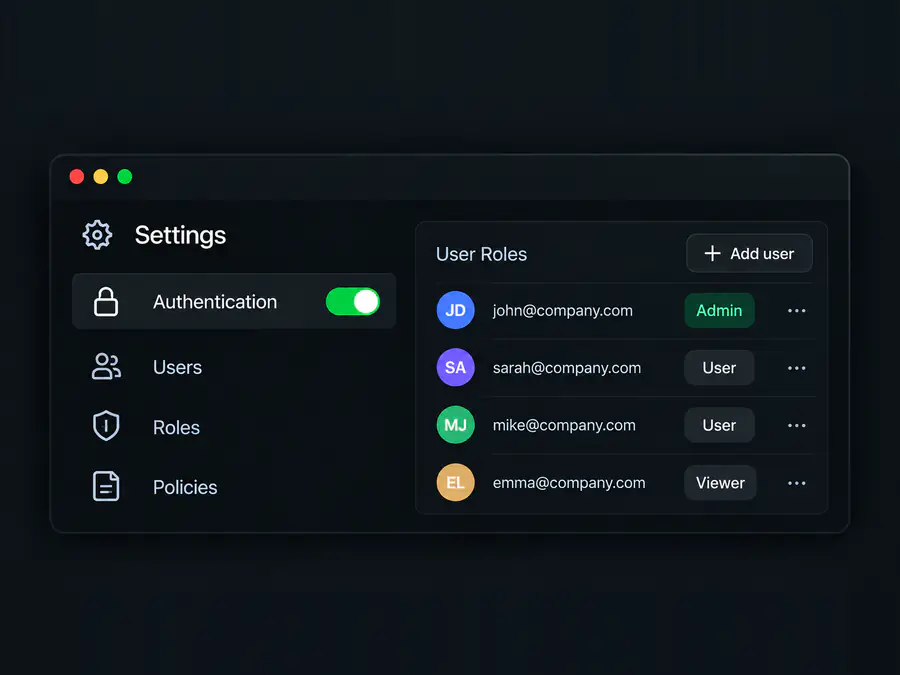
Auth and permissions
Broken sign in flows, missing roles, and policies that let the wrong person read the wrong row.
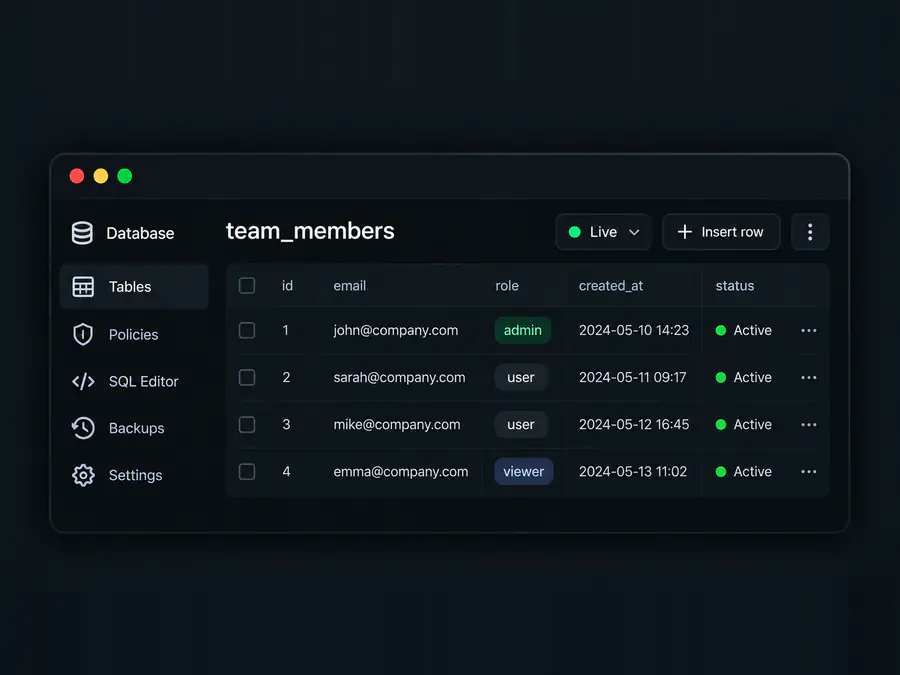
Database and access rules
Row level security never switched on, tables with no policy at all, and queries that will not scale.
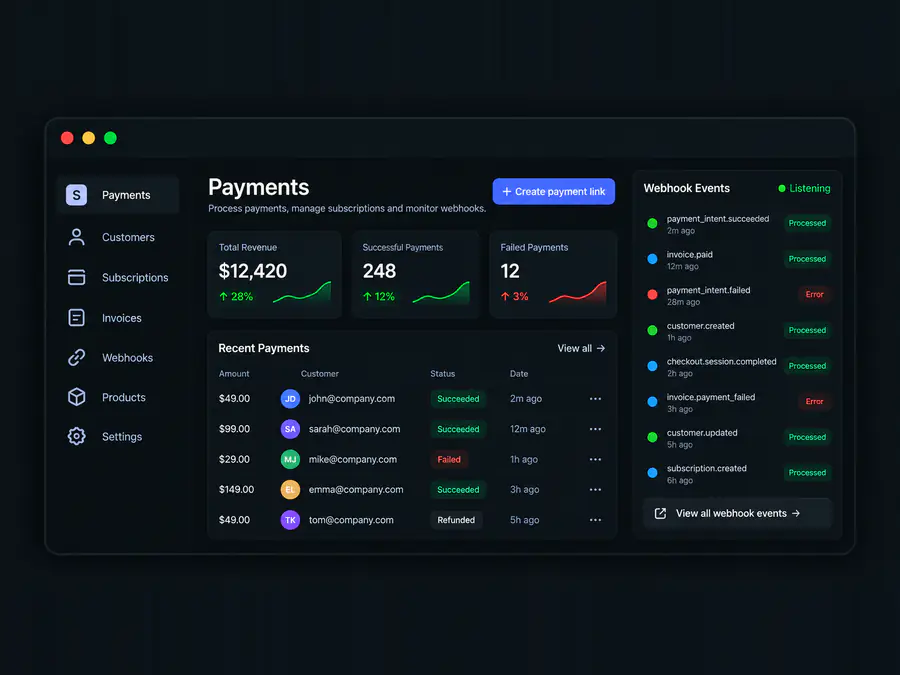
Payments and webhooks
Charges that fail quietly, webhooks arriving twice, and the confirmation email nobody ever wired up.
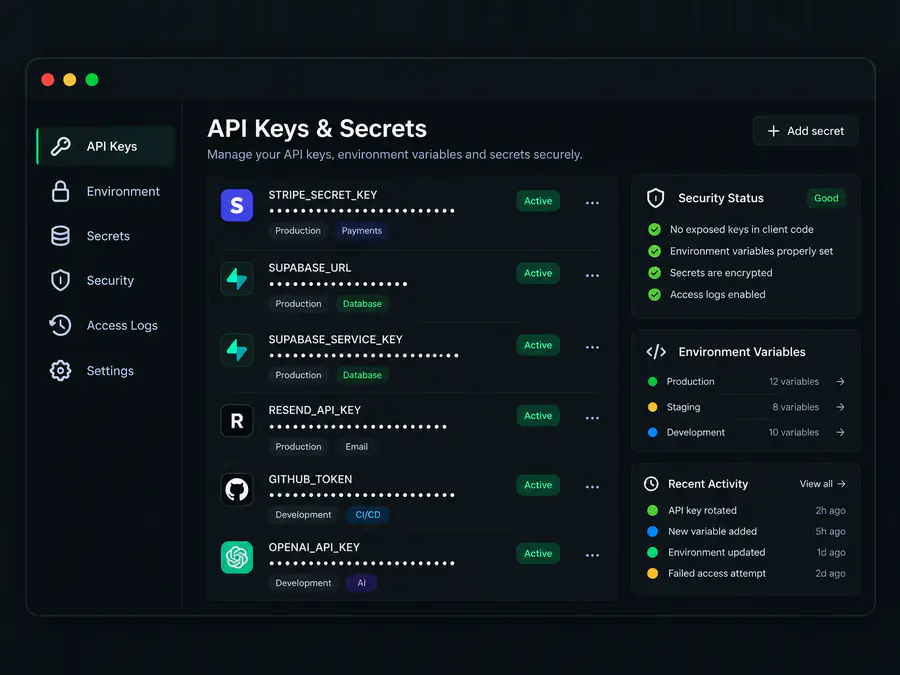
Keys and secrets
API keys sitting in the browser bundle, one environment for everything, and nothing rotated.
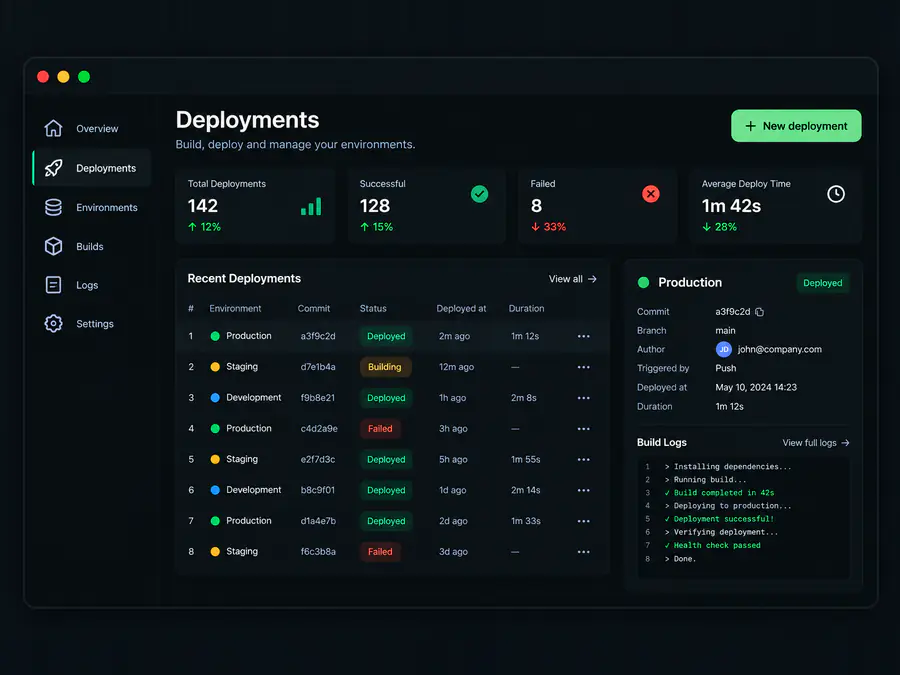
Deployment and environments
Builds that break on a Friday, staging that does not match production, and no way back.
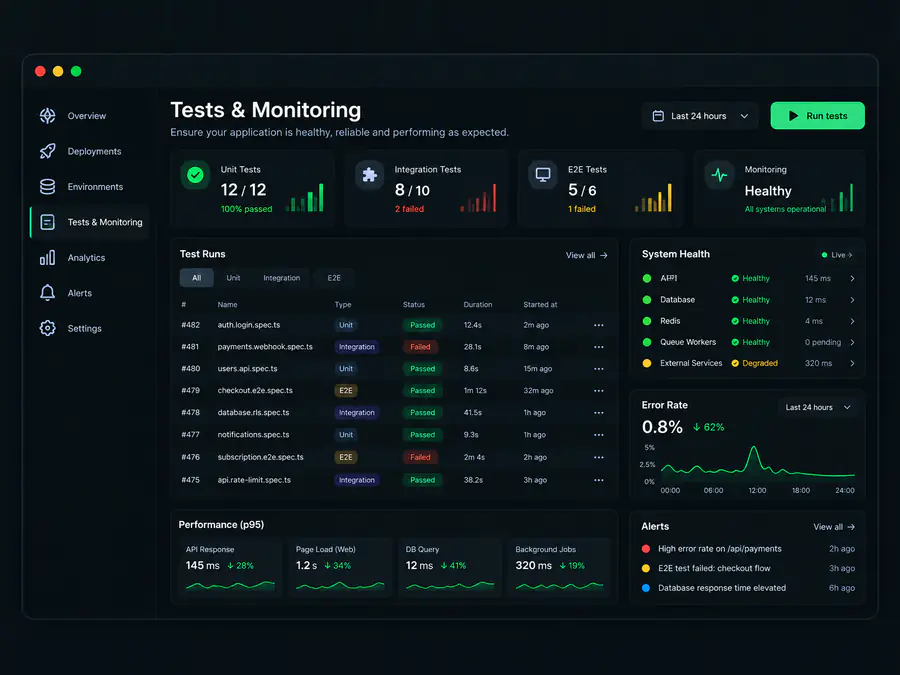
Tests and monitoring
No tests, no alerts, and the first report of an outage arriving from a customer.
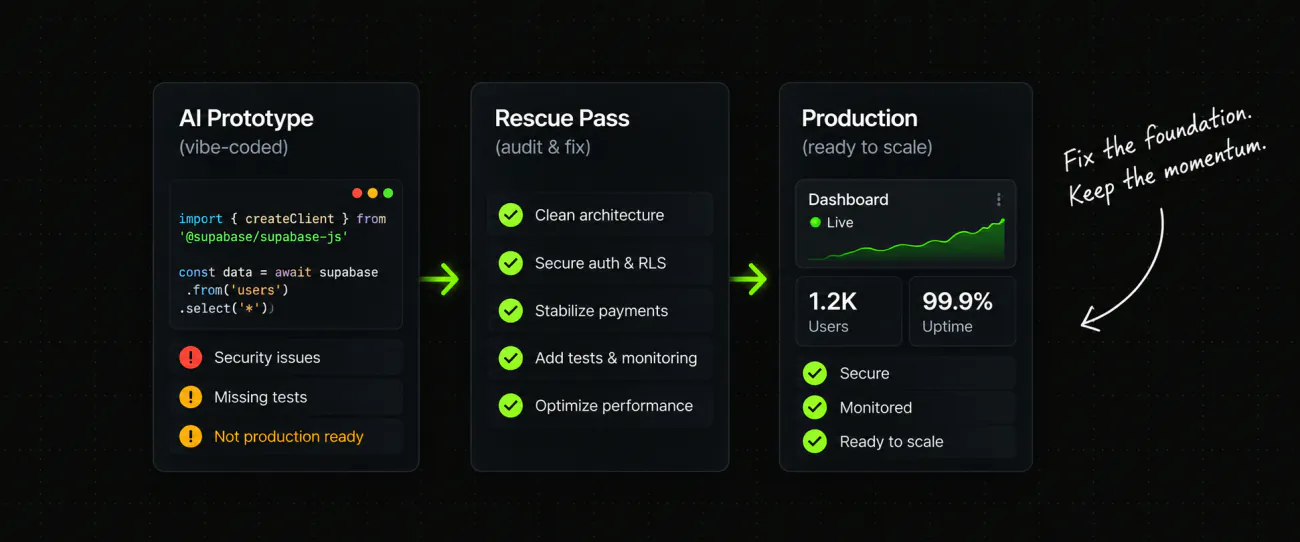
Don’t rebuild what can be rescued.
Your prototype already has the hard part. Users, data, feedback, momentum. Starting again throws all of it away to solve problems that are cheaper to fix in place. We fix the foundation instead, so you ship sooner and for less.
Check your app in thirty seconds
Paste the address of your live app. We read what it already sends to every visitor and tell you what is exposed. No signup, no repository access, nothing changed on your side.
What we look at
- API keys left in the browser bundle
- Supabase row level security
- Security headers
- Insecure and blocking resources
- Search engine indexability
- Layout shift and page weight
This is the same list we work through on day one of a rescue. If it comes back clean, you do not need us yet, and we will say so.
From working demo to real product.
Greetings From Albania came to us as a Lovable prototype. Enough to show the idea, not enough to run a premium tour business on. We rebuilt the foundation underneath it and kept everything that was already working.

Do you need to rewrite my app?
Usually not, and we treat a rewrite as the last resort rather than the opening move. Most AI built apps have a sound idea and a shaky foundation, and foundations can be replaced underneath a working product. If a rewrite genuinely is cheaper we will say so, and show you the working that got us there.
Which AI builders do you work with?
Lovable, Bolt, Replit, Cursor, Claude Code, Codex and v0, and whatever they generated underneath, which is usually Supabase or Firebase. The tool matters less than what it left behind, and the gaps are remarkably consistent whichever one built it.
Can you fix Supabase auth and row level security?
Yes, and it is the single most common hole we find. The client holds a key, so the database itself has to be the thing that says no. We check every table has security switched on and an explicit policy, that policies are written against the signed in user rather than something the client can set, and that service keys never leave the server.
Can you take over an existing codebase?
That is the whole service. We start with an audit, which is a small fixed piece of work that ends in a written report of what is fragile, split into what blocks launch, what is risky and what is cosmetic, each one priced. You can hand the report to anybody, including another team.
How long does a rescue take?
The audit is days. The fixes depend on what it finds, but most rescues run three to six weeks from report to production, and we do the launch blocking set first so you are never waiting on cosmetics to go live.
What happens after launch?
Monitoring and error tracking go in before you go live, so you hear about problems before your customers do. After that we can keep building on a retainer or a sprint, or hand over completely. The code and the documentation are yours either way.