
Software built
to last.
SaaS platforms, marketplaces and internal tools engineered around how your business actually works.

- Scalable architectureBuilt for growth
- Web and mobileAcross every device
- Production readyDeploy with confidence
- Built to be maintainedClean, documented code
Our process
How software actually gets built
A clear, collaborative process from the first idea to a product people actually use.
- 01
Scope
The smallest version that is genuinely useful, and an honest estimate for it.
- 02
Architect
Data model, auth, permissions and integration boundaries agreed before code is written.
- 03
Build
Two week increments, each one deployed and demonstrable rather than described.
- 04
Operate
Monitoring, error tracking and a maintenance agreement so the thing keeps working.
Software we build
Different businesses, different goals. These are the kinds of software we build most often.
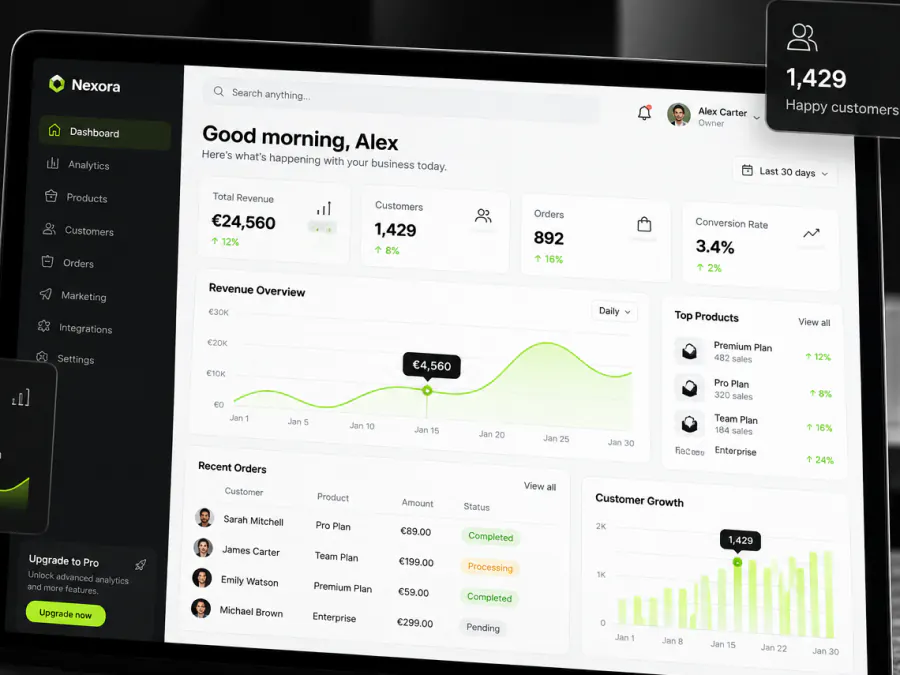
SaaS products
Subscriptions, dashboards, teams and multi tenant platforms.
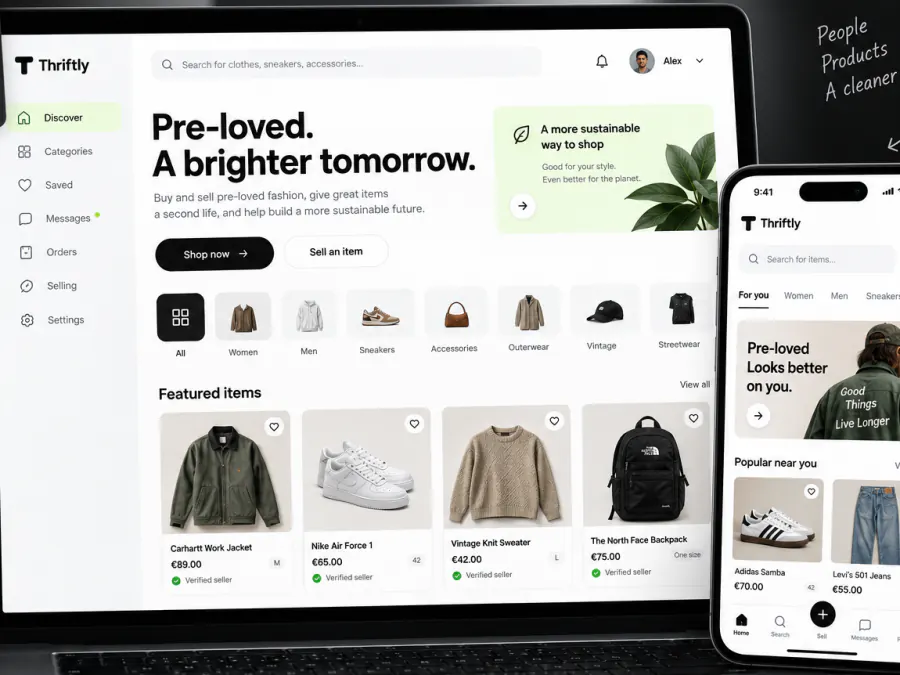
Marketplaces
Buyers, sellers, payments and all the workflows in between.
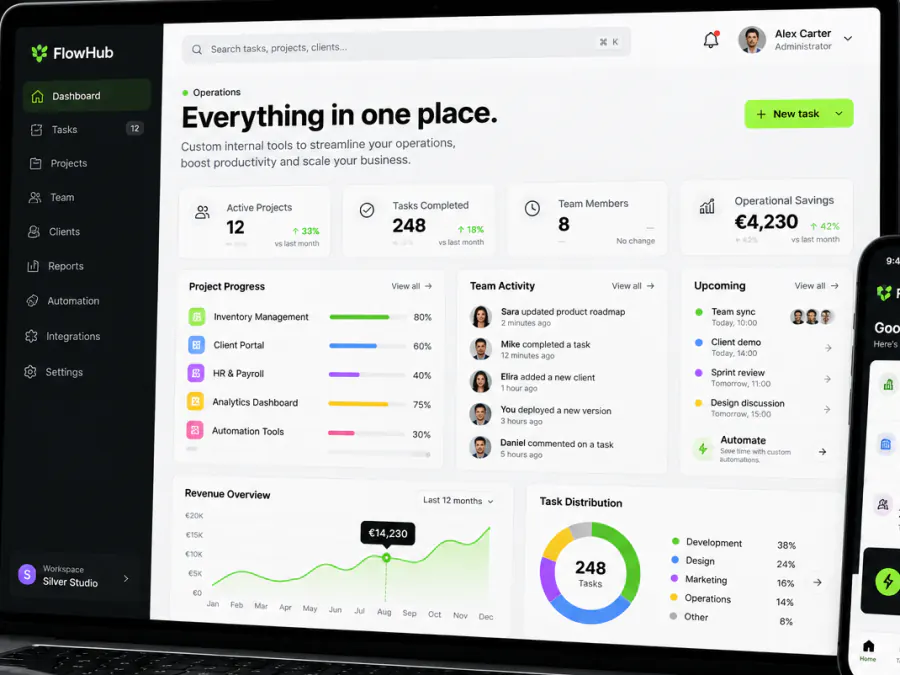
Internal tools
Operations, CRM, automation and the dashboards your team lives in.
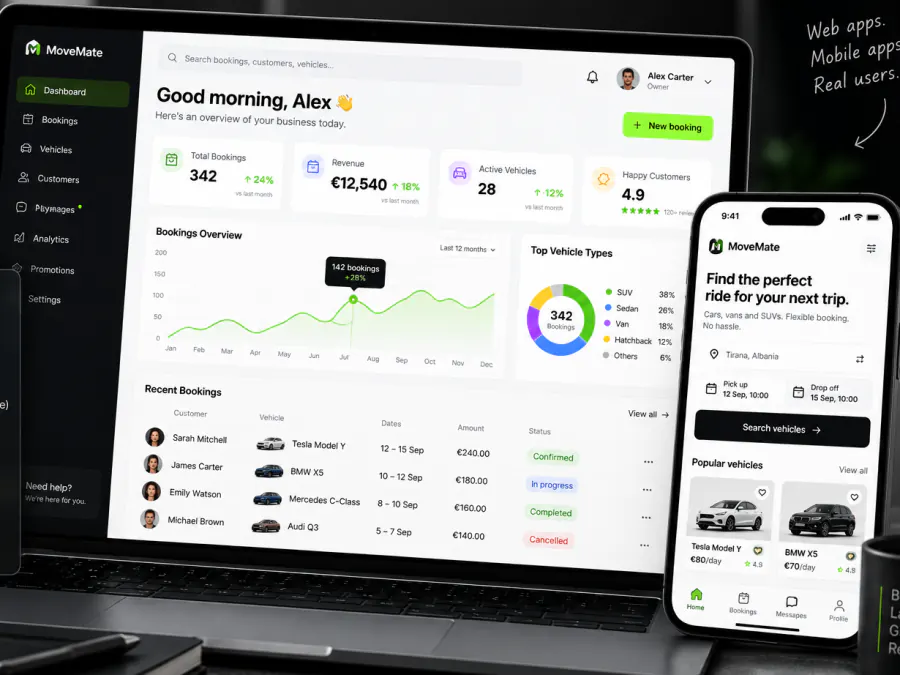
Web and mobile apps
Responsive web apps and native mobile, sharing one backend.
Built as a system.
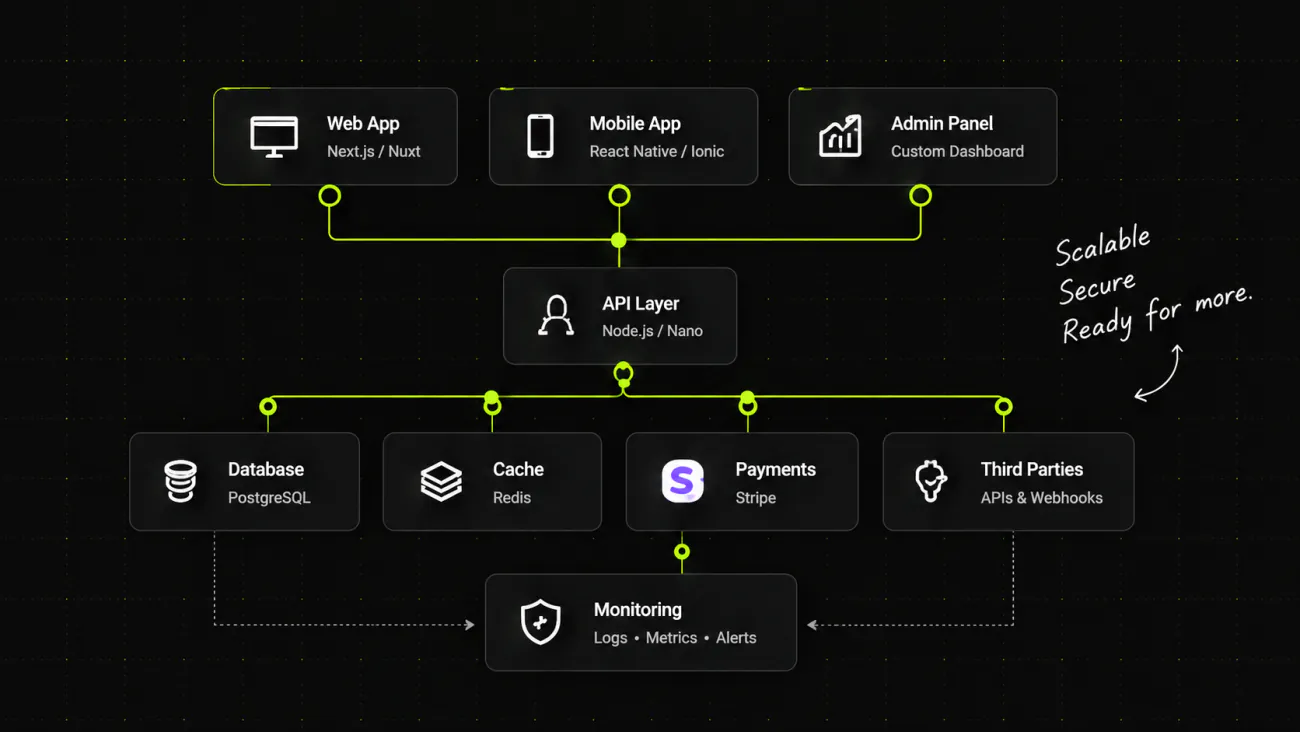
Not a pile of screens held together with hope. We design the whole thing, from the frontend down to the infrastructure, so the product is secure, scalable and ready for whatever you ask of it next.
- Modular, maintainable architecture
- Secure authentication and permissions
- Third party integrations for APIs and payments
- Automated testing and continuous delivery
- Monitoring, logging and alerting
- Documentation and handover
Get a technical read on your idea
Describe what you want to build. You get back the smallest useful first version, a stack we would actually use, the risks worth knowing about, and how long it is likely to take.
Before you read it
- This is a first read, not a quote.
- We estimate in weeks, not money, because price depends on scope we have not agreed yet.
- A real number comes after a conversation, and we will tell you if we are the wrong team for it.
Real projects. Real results.

Hey Halo
A voice first AI assistant that runs on the device and lives in the macOS notch, taken from idea to a downloadable Mac app.
View project
Greetings From Albania
A Lovable prototype turned into a full tour operator platform, with its own booking, subscription and management system.
View project
How much does custom software cost?
It depends almost entirely on scope, so we price each build after a short discovery rather than publishing a number that would be wrong for most people. What we can promise is a fixed estimate before any build work starts, and a first version scoped deliberately small so you find out early whether the idea works.
How long does an MVP take?
Usually eight to twelve weeks for a first version real people can use. We work in two week increments and deploy every one, so you are never waiting on a big reveal at the end, and we can change direction in days rather than months.
Can you take over an existing codebase?
Yes, and we start by reading it rather than rewriting it. You get an honest report on what is solid, what is fragile and what is going to cost you later, then a plan that keeps whatever is worth keeping. A rewrite is a last resort, not an opening move.
Do you build mobile apps too?
Yes, native iOS and Android alongside the web app, sharing one backend so accounts, data and messaging stay in step across every surface. Thrift Albania runs exactly that way and Hey Halo is a native desktop build.
Can you integrate with our existing systems?
That is most of the work on an internal tool. Payments, accounting, CRMs, warehouse systems and anything with an API or a file drop. Where a system has no API we agree a boundary and build against it, so a change on their side does not break yours.
What happens after launch?
Launch is where the useful data starts. Monitoring and error tracking are in place before you go live, and from there we keep building on a retainer, a sprint, or whatever shape fits. If you would rather run it yourself, the handover includes the documentation to do that.