
AI built to do
real work.
Assistants, agents, retrieval and automation that solve a real problem, run on your real data, and are measured on what they actually save you.
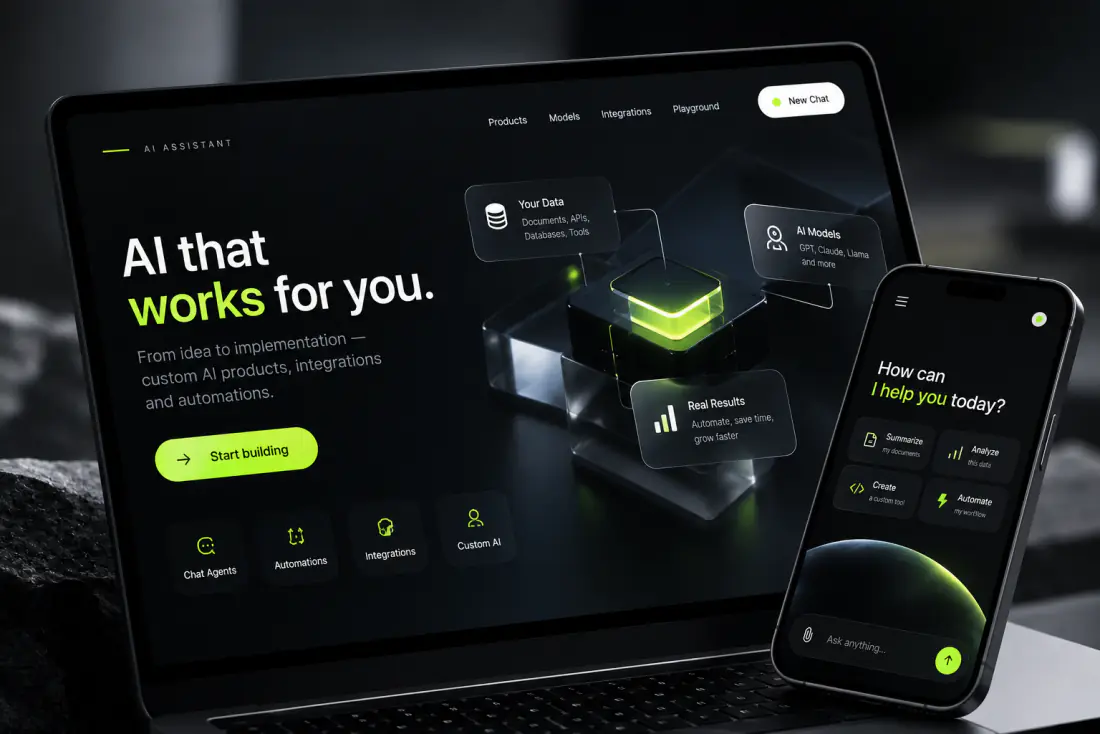
- EvaluatedAgainst real examples
- Cost awareA ceiling per user
- GuardedFallbacks and limits
- Production readyBuilt to scale
Our process
How AI actually gets into production
From an idea to something people use every day, with a way to tell whether it is working.
- 01
Qualify
Which task, done how often, by whom, and what a good answer actually looks like.
- 02
Prototype
The narrowest working version, evaluated against real examples rather than demos.
- 03
Harden
Guardrails, fallbacks, rate limits, logging and a cost ceiling per user.
- 04
Measure
Accuracy, spend and time saved tracked after launch, with a tuning loop.
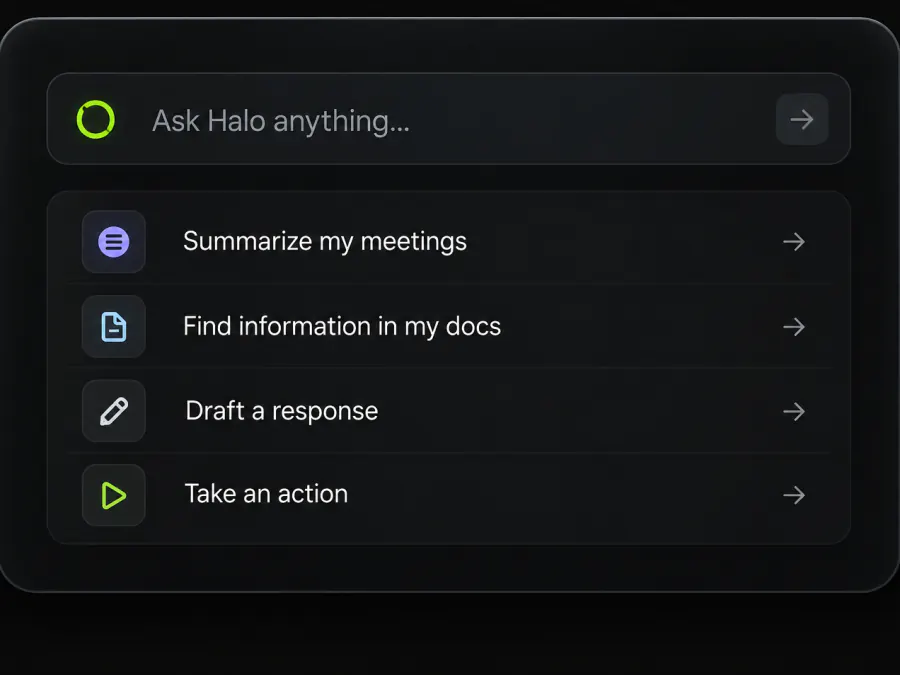
AI assistants
Conversational interfaces that work with your own data, tools and workflows.
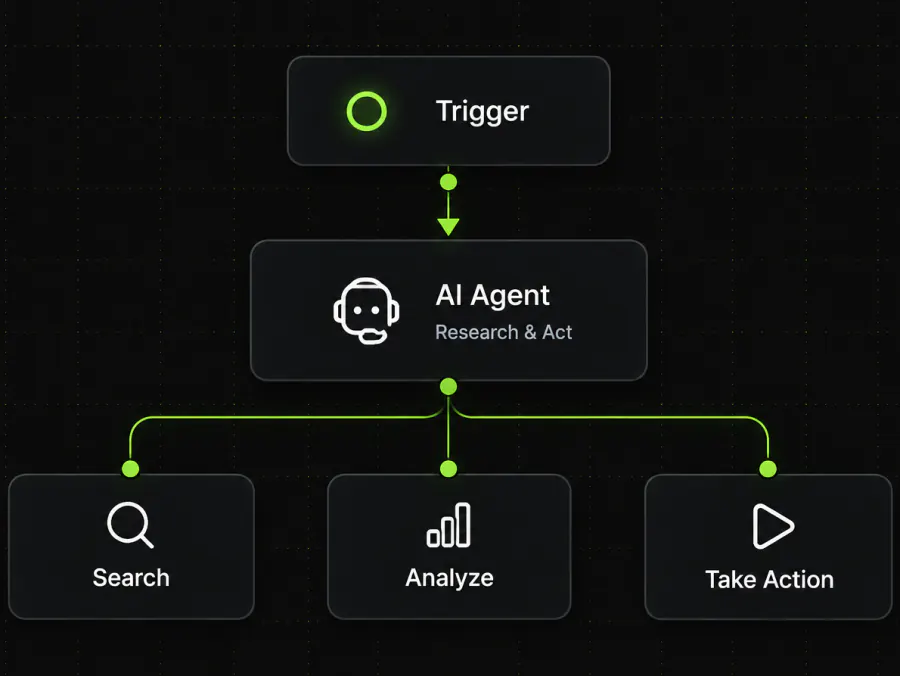
AI agents
Agents that research, plan and take actions across the systems you already run.
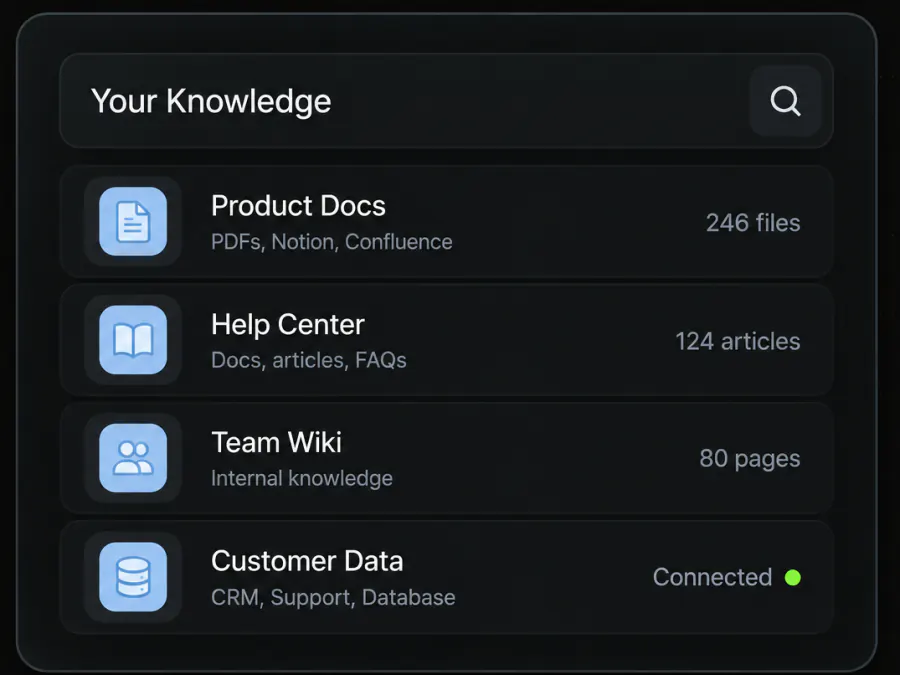
Retrieval and knowledge
Turn your documents into answers people can trust, with the sources attached.
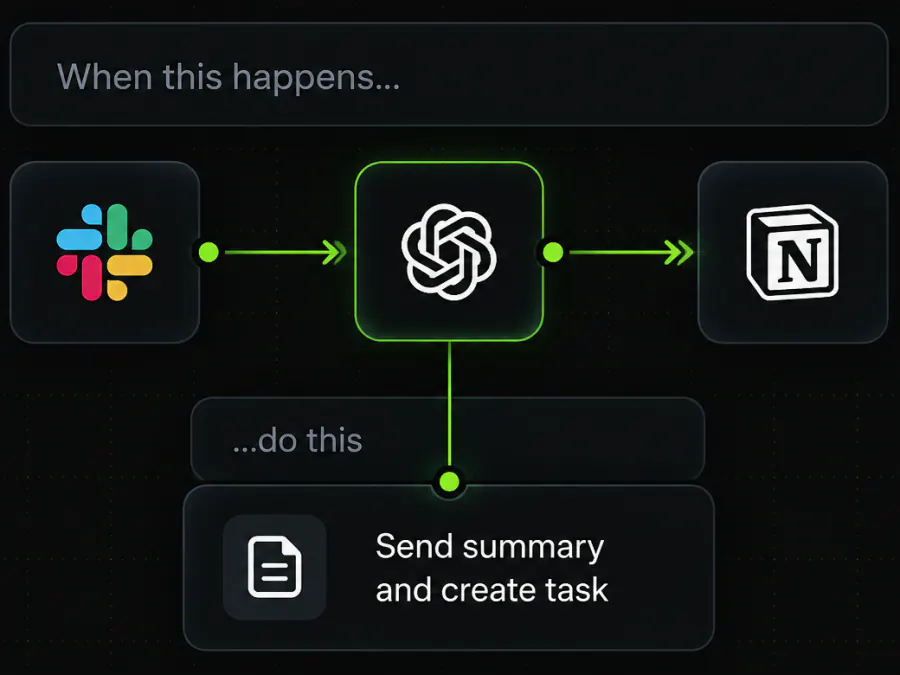
Workflow automation
Take the repetitive work off your team and connect the tools it lives in.
Built around your data.
Not a demo.
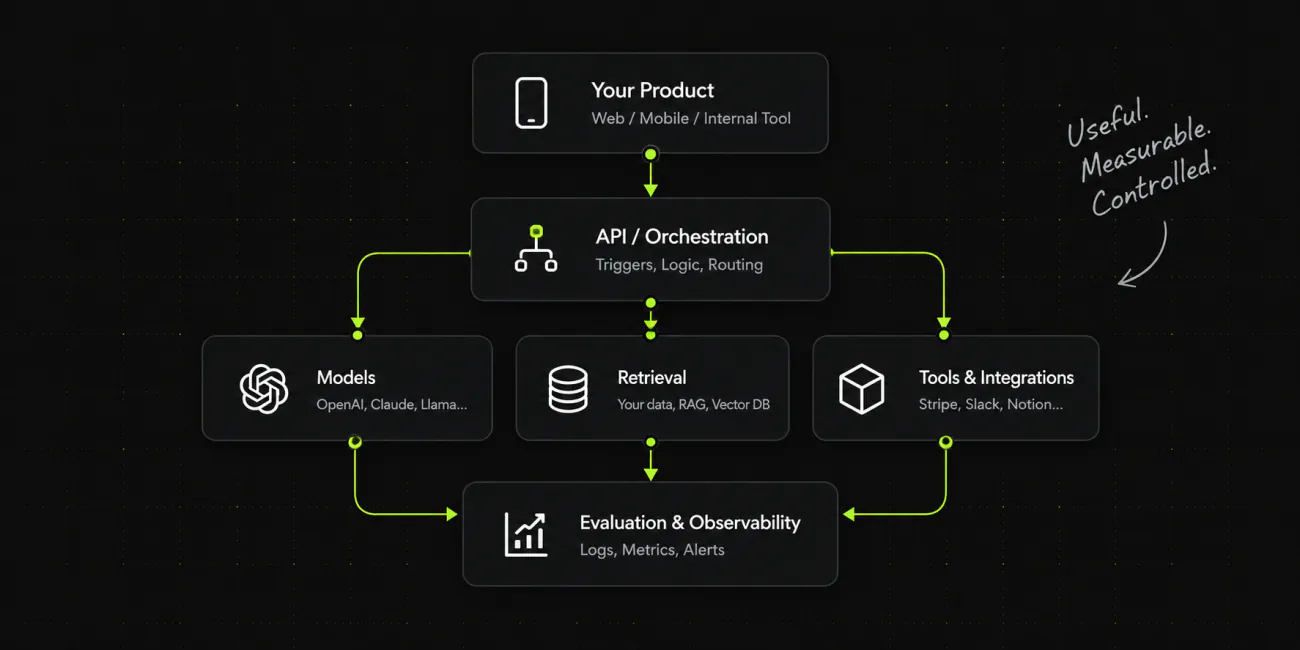
A demo proves the idea. It does not prove the thing will hold when it meets your real data, your real volumes and someone trying to break it. We build the part that holds.
Real results.
Not guesswork.
Every system we ship carries an evaluation you can check and a cost you can see. That is how you find out whether it earns its place, and what to change if it does not.
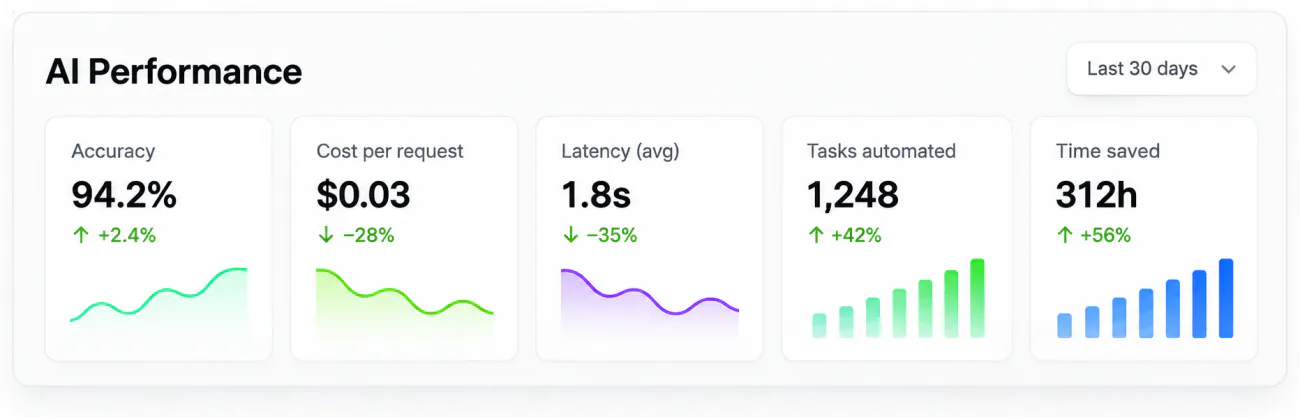
An example of the readings an evaluation harness tracks, not a client result.

Where should we use AI in our business?
Usually in the task that is done often, by a lot of people, and where a good answer looks the same every time. We start by finding that task rather than by picking a model, because most AI projects fail on the choice of problem, not on the technology.
Can AI work with our private data?
Yes, and that is most of the work. Your documents and records stay in systems you control, the model sees only what a given user is allowed to see, and nothing is used to train anybody's model. Where the data cannot leave your network at all, we build for that.
How do you control hallucinations?
By making the system answer from your sources rather than from memory, showing which document each answer came from, and letting it say it does not know. Then we grade it against a real set of questions before launch and keep grading it afterwards.
How much does an AI project cost?
Two numbers matter and we quote both. The build, priced after a short discovery, and the running cost per request, which we budget and cap so a busy month cannot surprise you. If the running cost cannot be made to work, we tell you before the build, not after.
How long does it take to build?
A narrow, genuinely useful first version is usually four to eight weeks, because the point is to get it in front of real users and find out where it is wrong. Broader systems with several integrations run longer, and we scope them in stages.
Do you provide ongoing support?
Yes, and AI needs it more than most software. Models change, your data changes and the questions people ask change. We keep the evaluation running, watch cost and accuracy, and tune it on a retainer or a sprint, whichever suits.